

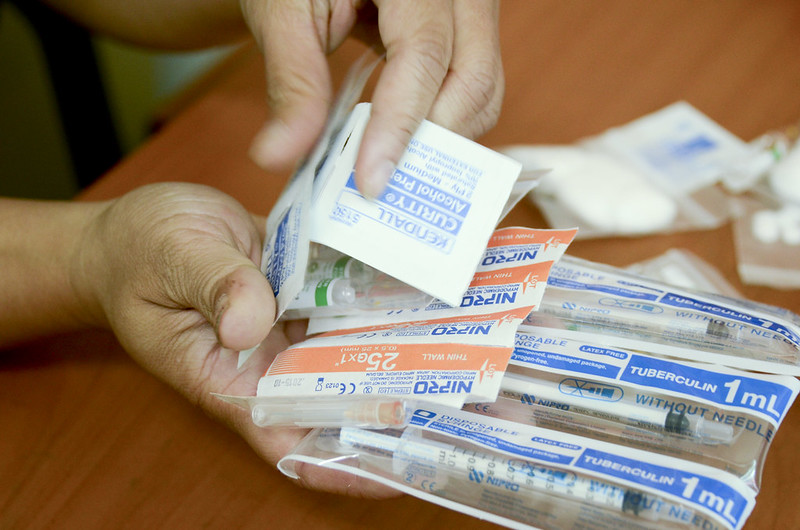
Image credit: World Bank Photo Collection, licensed under CC BY-NC-ND 2.0
by Dr Czarina Behrends and the HOME team
Rapidly increasing contamination of the drug supply with fentanyl and now xylazine (‘tranq’) has led to record-high numbers of overdose deaths in the United States. For someone with a low tolerance towards opioids, even a small contamination in their drug supply with fentanyl can quickly lead to a dangerous drug use experience—and can even be fatal—unless proper interventions, such as naloxone or oxygen, are administered in time.
For anyone who uses drugs, having easy access to sterile preparation equipment, including sterile syringes and smoking supplies, is important to minimize your risk for future infections or injuries from drug use.
Increasing access to harm reduction services that distribute syringes, fentanyl test strips, naloxone, and other supplies to prevent complications from drug use is important for preventing emergency department visits and overdose fatalities for people who use drugs. In the US, the main options for obtaining sterile syringes and naloxone are pharmacies and syringe services programs, but these venues have limitations. People may avoid using pharmacies due to poor treatment from staff, lack of staff knowledge about dispensing policies, or failure to stock supplies. Inconvenient hours or locations, risk of law enforcement interactions, and lack of transportation may also prevent people from using syringe service programs.
Half of people who inject drugs in the US are estimated to live outside of major urban areas, yet 69% of syringe service programs are located in urban settings. Many people who inject drugs cannot entirely rely on the current options for all their harm reduction needs. One promising way to expand access for underserved people who inject drugs is via mail-based harm reduction services, which are programs that mail out harm reduction supplies (i.e., syringes, naloxone, smoking kits).
One such provider of mail-based harm reduction services in the US is the Needle Exchange Technology (NEXT) Distro—a national, online-based, non-profit harm reduction program that mails out naloxone, syringes, and other supplies at no cost to the recipients of the service. NEXT Distro has been operating in the US since 2017. So far, they have delivered no-cost naloxone to over 90,000 households across the country.
In France, the service HaRePo (harm reduction by post) has been operating since 2011. Since the beginning of operation, HaRePo have sent 10,450 parcels, accounting for more than 1.7 million syringes and 6 million HR-related items. An evaluation of HaRePo found that it was particularly good at accessing harder-to-reach populations in France, including women, people engaging in chemsex, and people living in rural areas.
In the context of the COVID-19 pandemic, one of Australia’s peer-based drug-user organizations, NUAA, began a postal harm reduction service. While it began as a way to reach people who use drugs who were in lockdown, demand for the postal service continued after the lockdowns ended. Orders for naloxone and injecting equipment can be submitted online or via a phone call.
Internet-based mail-delivered harm reduction services remove transportation barriers as well as helping to ensure privacy and confidentiality. Could this type of program be useful and acceptable for people who inject drugs who otherwise cannot access harm reduction equipment?
Previous studies that have tried to answer this question collected community-based surveys at locations such as syringe service programs or clubs and festivals. Those studies have found that multi-pronged approaches are necessary to reach various participants in terms of age, and community partnerships typically aid the collection of data from hard-to-reach populations. Surveys that capture the harm reduction experience of rural people who use drugs and minority populations are needed.
Our study, named HOME (Harm reduction services Offered through Mail-delivery Expansion), is one of the first national studies in the US to contribute to understanding what type of harm reduction service delivery works best for different types of people, specifically the role of mail-based harm reduction services. The HOME study aims to recruit an online-based, national cohort of 1,233 people who inject drugs in the US that will be followed over an 18-month period to assess uptake and retention of mail-based harm reduction and to also generally understand how to better meet harm reduction needs of people who use drugs.
If you are interested in participating, we are looking for individuals over the age of 18 who are located within the United States and can remain in the study for the full 18-month period. Participants must be able to read and write in English or Spanish and have never used mail-based harm reduction services before. Please complete this survey to see if you can participate. If you are eligible, we will send you an email or a text message with next steps. If you have any questions, you can email us at [email protected]. Thank you, and we greatly appreciate your contributions.

Dr Czarina Behrends is an epidemiologist with qualitative, quantitative, and mixed methods analysis experience studying harm reduction, HIV/HCV prevention and treatment, and improving health services delivery for people who use drugs. Dr Behrends serves as the principal investigator on the HOME study.
Disclaimer: This article is provided for informational purposes only and is not intended as legal, medical, or professional advice. Always seek the guidance of a qualified health professional regarding any questions you may have about drug use, harm reduction, or your health. Laws regarding drug use and online activity vary by location—ensure you understand the laws applicable to you before taking any action. Views expressed in the article are the author’s, and do not necessarily reflect the views of Bluelight Communities Ltd.