

Photo by Hannah Busing on Unsplash
by Travis McCullough
When people talk about harm reduction, the conversation usually starts and ends with test kits, naloxone, and syringes. All crucial stuff, of course. But there’s an equally important side of harm reduction that rarely shares as much of the spotlight… the body that carries you through the night (and the next day). What you eat, how much you hydrate, and whether you get any sleep can quietly shape how safe or risky your experience becomes.
The overlooked side of harm reduction is about healthy bodies: hydration, nutrition, rest, and collective care. A healthy body isn’t separate from safer use, it is safer use… Taking care of ourselves is the first step to taking care of each other.
Let’s talk about the things that seem small — snacks, naps, hydrating, stretching — but add up to a massive difference in how well you recover and how safe your scene really is.
The Side of Harm Reduction No One Talks About
Ask any harm reduction worker what’s in their kit, and you’ll hear the usual: naloxone, test strips, sterile water, syringes, and maybe even a CPR mask. Ask what’s in their stomachs, though, and you might get an awkward laugh.
The sad truth is, when discussing harm reduction techniques, we spend most of the time talking about how to avoid dying, which makes sense, but not nearly enough time talking about how to keep living well. The bodily side of harm reduction is usually overlooked. Our body filters everything we ingest for every single experience we have, so we should treat it with some respect.
You wouldn’t expect your car to start without any gas in the tank. The same goes for your body. Lack of hydration, overworking (or partying), skipping healthy meals, and regularly bad sleep make you feel rough, and they increase the risks and possible permanent damage done to your body. This includes messing with your tolerance, making comedowns harsher, or even turning a “mild night” into a “wild night” that ends in the ER.
The best harm reduction often looks boring to some. But if you’re trying to stay alive, have a good time doing it, and keep doing it for the foreseeable future, boring is the difference between a typical night out and one that ends in disaster.
Fuel, Fluids, and Function
Hydration may not sound sexy, but it really is the game-changer between a fun night out followed by a rough morning, and irreversible oxidative stress to your brain, kidneys, and liver. If you aren’t planning on quitting anytime soon, you would do well to take extra care of these organs.
Drugs that spike your body temperature, as well as your body’s ability to regulate it, like MDMA, cocaine, and amphetamines, are obviously going to throw off your hydration balance as well. Dehydration is so damaging because it thickens your blood, which puts extra strain on your heart and ultimately makes tomorrow’s (or next week’s) comedown much worse. We all know the first signs of dehydration: thirst, lack of needing to urinate, dark colored urine, headaches, and muscle cramping. So when these side effects start to show their ugly faces, it means you need to make up for lost time and get some fluids into your system.
On the other hand, drinking too much water can be an equally dangerous problem. The opposite of drinking too much water leads to a condition known as hyponatremia. Sodium is one of many important electrolytes that control fluid balance, nerve function, and muscle contractions. When we drink too much water, we end up losing more electrolytes, including sodium. This also happens through over-sweating from dancing too hard at a festival or vomiting from chugging too much water at once to make up for lost time. When there is more water outside of our blood cells, osmosis causes water to start forcing itself into cells, leaving no room for sodium, instead of maintaining the delicate balance outside of the cell. This can lead to sudden confusion, nausea, headache, as well as serious conditions like seizures or death (did you notice that some of these symptoms overlap with dehydration?).

Figure: Osmotic pressure on blood cells diagram. Illustration by LadyofHats, 2007. Public domain via Wikimedia Commons.
There are two ways to combat this problem.
- Don’t just drink water to stay hydrated; replace those lost fluids with electrolytes as well.
- Drink smaller amounts of water more frequently, ~8oz. every 15-20 mins. Coconut water, sports drinks, or a homemade salt-sugar mix will work, especially if your normal diet lacks salt.
Nutrition matters, too. Your brain runs on glucose, amino acids, and healthy fats. After a night of dancing, rolling, or staying up too late, you’ve burned through your reserves. Replenish them. Complex carbs, fruit, eggs, and something with salt can make your body thank you faster than any miracle supplement.
It’s not about being perfect — it’s about being functional. Pack snacks you’ll actually eat. Bring a banana or granola bar. Share food with your crew. Sandwiches have saved more lives than people realize.
And no, caffeine-packed coffee and energy drinks don’t count as hydration.
Rage, Rest, Recovery, and Repeat
Whether or not you realize it, sleep isn’t a luxury; it’s a vital part of your risk management plan. Lack of sleep hits harder than most people realize. It leads to slower reaction time, heightened anxiety, poor judgment, and a weaker immune system, all wrapped in one unpleasant package.
Stimulants, psychedelics, alcohol, and late nights hijack your sleep cycle. That’s fine occasionally — the human body is ridiculously resilient — but the recovery phase matters big time. Your brain needs REM sleep to process experiences and restore neurotransmitters like serotonin and dopamine — the same chemicals many substances deplete.
So, if you’ve been up for a while, give yourself a soft landing: blackout curtains, magnesium or melatonin, or even just quiet time in a dim room. A short nap or “rest day” isn’t wasted time — it’s how you get your mind and body back to baseline.
Mixing substances is generally a bad idea but keeping some of your prescribed pharmaceutical landing gear on hand can be a life saver. In specific situations, benzodiazepines can help you get over that hump where you are staring at the ceiling, praying for sleep to come. Just don’t make a habit of using them. Below you can find Tripsit’s ‘Guide to Drug Combinations’. It’s a very thorough resource, but don’t rely on something like this as the be all and end all of rules when combining substances. For example, everybody’s biology is different and a chart like this can’t account for an allergic reaction or sensitivity to a substance.
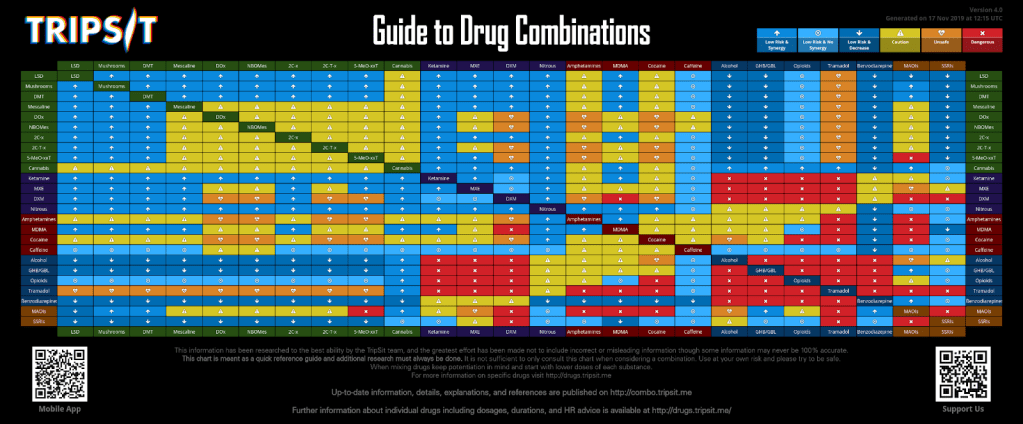
TripSit. (2019, November 17). Guide to drug combinations [Infographic]. TripSit Wiki. https://wiki.tripsit.me/wiki/Drug_combinations
Use and distribution permitted for non-commercial purposes with attribution. Information is intended as a quick reference only and should not replace individual research or professional advice.
Gentle movement helps, too. Stretch. Walk outside. Let sunlight hit your face. It sounds cheesy, but light tells your brain the party’s over and the healing’s begun.
Listening to Your Body: Contraindications and Awareness
We talk about “set and setting,” but not enough about “system.” As in, the one keeping your heart beating.
Before you use, take a moment to think about what else is already in your body. High blood pressure? Heart palpitations? Prescription meds? That’s not paranoia — it’s prevention. Some antidepressants (SSRIs) don’t mix safely with MDMA. Grapefruit juice, bizarrely, can block liver enzymes and cause certain drugs to stay in your system longer. MAOIs and stimulants? Bad combo.
You don’t need a degree in pharmacology — just curiosity and caution. Check resources like Bluelight, PsychonautWiki, or Erowid. Know your conditions, meds, and limits. If your heart’s racing before you even start, that’s your body waving a red flag.
And if you’re ever unsure, less is more. You can always take more later — you can’t un-take what’s already in your bloodstream.
From Self-Care to Crew Care
Harm reduction has always been a community project, not a solo sport. “Crew care,” “mutual maintenance,” “peer care” — call it whatever you like, it’s the backbone of safer use.
You’ve probably seen it in action without naming it. Someone passing you a water bottle. A friend insisting you eat before redosing. The one person at the afters making breakfast or offering their couch. Those are acts of harm reduction, too — just with eggs and empathy instead of naloxone and needles.
If you’ve ever been the caretaker of the group, you already know how thankless it can feel. But the truth is, the people who keep others hydrated, rested, and grounded are the quiet heroes of every scene. They’re the reason everyone makes it home in one piece, and we salute you.
So if your crew has a “designated driver,” think about having a “designated care friend,” too. The person who brings snacks, checks in, and makes sure no one’s alone in the bathroom for too long. That’s transcending harm reduction of the self and evolving into harm reduction of the team.
Building Healthier, Safer Scenes
A safer scene doesn’t just mean fewer overdoses — it means communities where people look out for one another’s physical and emotional wellbeing. Think about festivals with chill-out zones, water refill stations, or volunteers handing out fruit and electrolyte packets. That’s institutionalized crew care.
We can build that same culture offline, too. Shared meals after long nights. Group chats to check in the next day. Organizing local “care circles” for people coming down or dealing with burnout. Harm reduction isn’t just crisis management — it’s maintenance, like cleaning your house before you end up on an episode of Hoarders.
When you consider others’ health, it becomes a shared practice and the whole community benefits. People stay connected. Trust deepens. And the stigma around drug use shifts — from survival to sustainability and responsibility.
That’s the real heart of this work: keeping each other well enough to keep showing up.
Conclusion: The Body Is Part of the Toolkit
It’s easy to focus on what you put into your body and forget about what your body needs from you. But hydration, nutrition, sleep, and mutual care aren’t side quests — they’re part of the main story.
Harm reduction isn’t just about staying alive. It’s about staying well. About having enough energy to laugh with your friends, remember the good parts, and wake up the next day without feeling like you’ve been hit by a truck made of regret.
So next time you pack your kit, maybe toss in a banana, some electrolyte packets, or a reminder to eat breakfast together before everyone crashes. That’s harm reduction, too — just in a different form.
Because the truth is, taking care of your body is taking care of your people. And taking care of your people? That’s how scenes stay safe, strong, and standing.

Travis McCullough is a copywriter born and raised in Colorado. He has a BS in natural resources management and has worked with various government organizations related to outdoor conservation. Today he spends his time pursuing his passion for teaching those around him about the outdoors and how it can help with issues surrounding addiction.
Disclaimer: This article is provided for informational purposes only and is not intended as legal, medical, or professional advice. Always seek the guidance of a qualified health professional regarding any questions you may have about drug use, harm reduction, or your health. Laws regarding drug use and online activity vary by location—ensure you understand the laws applicable to you before taking any action. Views expressed in the article are the author’s, and do not necessarily reflect the views of Bluelight Communities Ltd.